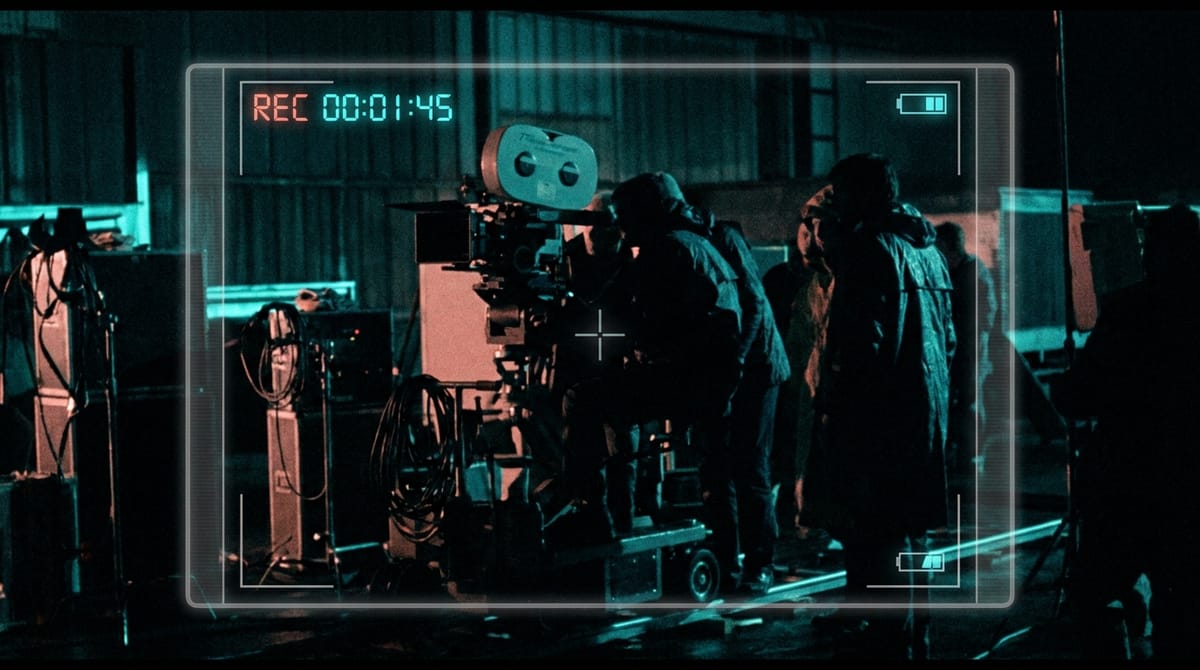
Ask ten people what a film director does and you'll get ten answers about cameras, actors, and “action!” None of those things exist on an AI production. There's no crew, no blocking rehearsal, no cinematographer adjusting a lens. And yet, if you've watched an AI-generated short and felt something — tension building, a joke landing, a character's loneliness in a wide shot — someone directed that. It just didn't look like directing used to look.
The Director's Job Hasn't Changed. The Toolkit Has.
Directing has always been the act of translating a feeling into a sequence of images. Coverage, blocking, lens choice, cutting rhythm — these are all just vocabulary for one question: what does the audience need to see, and when, to feel the thing you want them to feel? Generative video hasn't touched that question. It's changed the answer's delivery mechanism from a camera department to a well-structured sentence.
That reframing matters because a lot of people assume AI filmmaking is about typing a vague idea and hoping for magic. It isn't. Every shot in a competent AI-directed project still starts as a directing decision — wide or close, static or moving, warm or cold — before it ever becomes a prompt. The prompt is the execution layer, not the creative one.
Prompt Grammar Is The New Coverage
In traditional production, “coverage” means shooting a scene from enough angles that an editor has real choices later. In AI production, coverage means writing prompts with a consistent internal grammar so the model produces shots that actually cut together. That grammar tends to follow a reliable order: subject and wardrobe, action, camera behavior (push in, static wide, handheld drift), lens character (35mm, anamorphic flare, shallow depth of field), lighting quality, and finally mood or reference tone.
Directors who skip steps in that grammar — who describe mood but never camera behavior, for instance — tend to get beautiful but directionless footage: gorgeous frames that don't know what job they're doing in the sequence. Directors who front-load the camera language get shots that behave like shots, not like static paintings.
Shot-First Thinking, Not Frame-First
The biggest mental shift for anyone moving from traditional production into generative video is learning to think in shots again, not in single frames. It's tempting to fall in love with one perfect generated image and build a prompt around reproducing it. But a single gorgeous frame isn't a film. A director's real leverage is in sequencing: the wide that establishes space, the medium that holds a decision, the close-up that lands the emotional beat. That structure has to be decided before a single prompt is written, exactly as it would on a traditional set.
On every Arperture project, the prompt library comes after the shot list, never before. We block the sequence on paper — what each shot needs to accomplish narratively — and only then translate each entry into the camera and lighting language the model responds to.
Where Human Judgment Still Wins
Generative tools are extraordinary at execution and still unreliable at judgment. They don't know that a scene is dragging, that a joke needs one more beat of silence, or that an audience won't buy a character's motivation without an extra establishing shot. That's still entirely a director's call, made in the edit as much as in the prompt. The craft that's disappeared is manual operation — the craft that hasn't disappeared, and arguably matters more now, is narrative judgment: knowing what to ask for, and knowing when what you got isn't right yet.
That's the honest version of what “directing” means on an AI production: fewer people on set, no set at all in most cases, but the same relentless, specific decision-making about what the audience sees and feels, shot by shot. The camera changed. The job didn't.